


Introduction
Pregnancy comes with excitement, questions, and sometimes worry about a baby’s health. Many parents want reassurance as early as possible, without risking harm. That’s where the NIPT test in pregnancy often enters the conversation.
Doctors now recommend this blood test for many expecting parents because it offers early insight into certain genetic conditions with no risk to the baby. Understanding when it’s suggested and what it actually checks can help you make informed, calm decisions during pregnancy.
What Is the NIPT Test in Pregnancy?
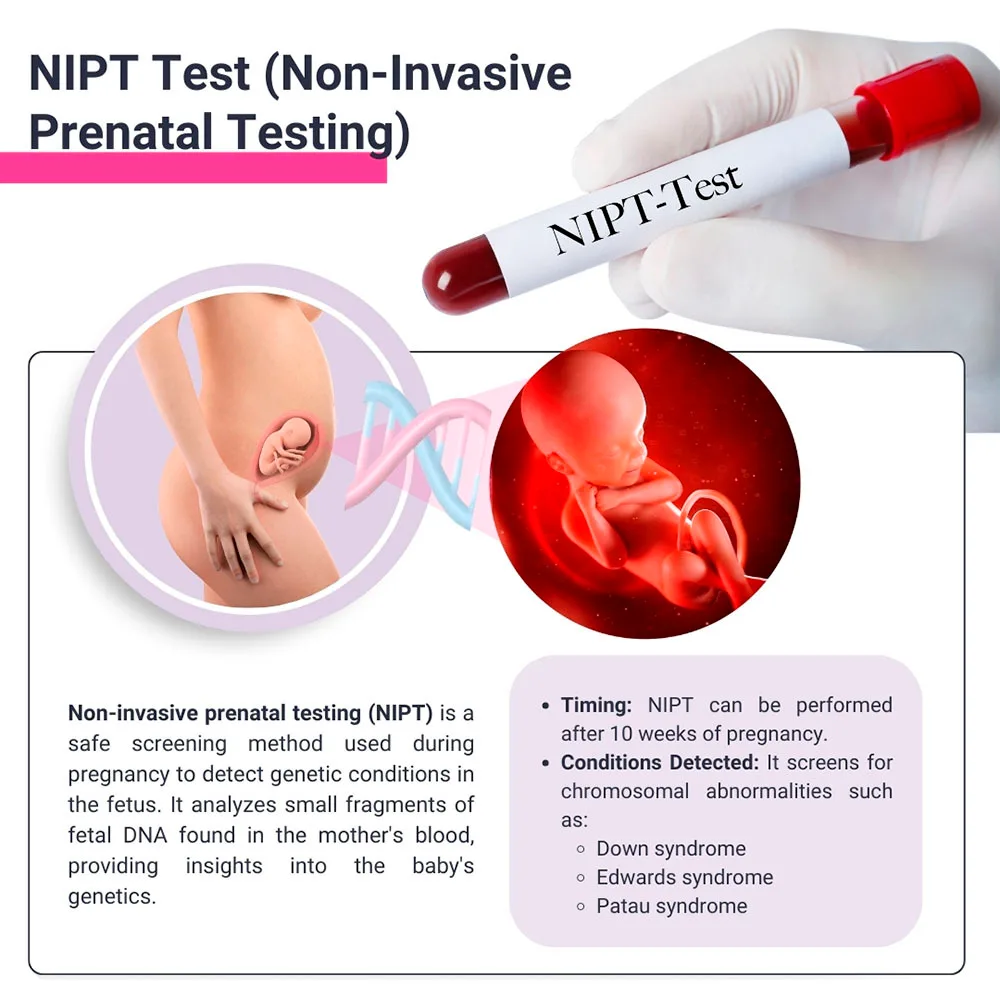
NIPT stands for Non-Invasive Prenatal Testing. It’s a simple blood test done on the pregnant person, usually after the 10th week of pregnancy.
During pregnancy, small fragments of the baby’s DNA circulate in the mother’s bloodstream. The NIPT test analyzes this DNA to look for specific chromosomal conditions.
It’s called non-invasive because there’s no needle entering the womb. No procedures like amniocentesis are involved.

When Do Doctors Recommend the NIPT Test?
Originally, doctors recommended NIPT only for high-risk pregnancies. That has changed.
Today, many healthcare providers offer the NIPT test in pregnancy to most expecting parents, regardless of age or risk level.
Common Reasons Doctors Suggest It
-
Maternal age 35 or older
-
Abnormal results from first-trimester screening
-
Family history of chromosomal conditions
-
Previous pregnancy affected by genetic disorders
-
IVF or assisted reproductive pregnancies
Even without these factors, many doctors now discuss NIPT as an option because of its accuracy and safety.
What Conditions Does the NIPT Test Screen For?
The NIPT test does not check for everything. It focuses on specific chromosomal differences that are known to cause genetic conditions.
Primary Conditions Screened
Down syndrome (Trisomy 21)
The most common condition detected. It affects intellectual development and physical traits.
Trisomy 18 (Edwards syndrome)
A rare condition that can cause serious developmental issues.
Trisomy 13 (Patau syndrome)
Another rare condition affecting organ development.
Optional Screening Areas
Some labs also screen for:
-
Sex chromosome conditions (like Turner syndrome)
-
Microdeletions (very small missing DNA segments)
-
Baby’s biological sex (if parents want to know)
Not all tests include these automatically. Doctors usually explain what’s optional and what’s standard.
How Accurate Is the NIPT Test?
Accuracy is one reason the NIPT test in pregnancy is widely trusted.
For Down syndrome, detection rates are above 99%. For other conditions, accuracy is slightly lower but still high.
It’s important to understand one thing clearly:
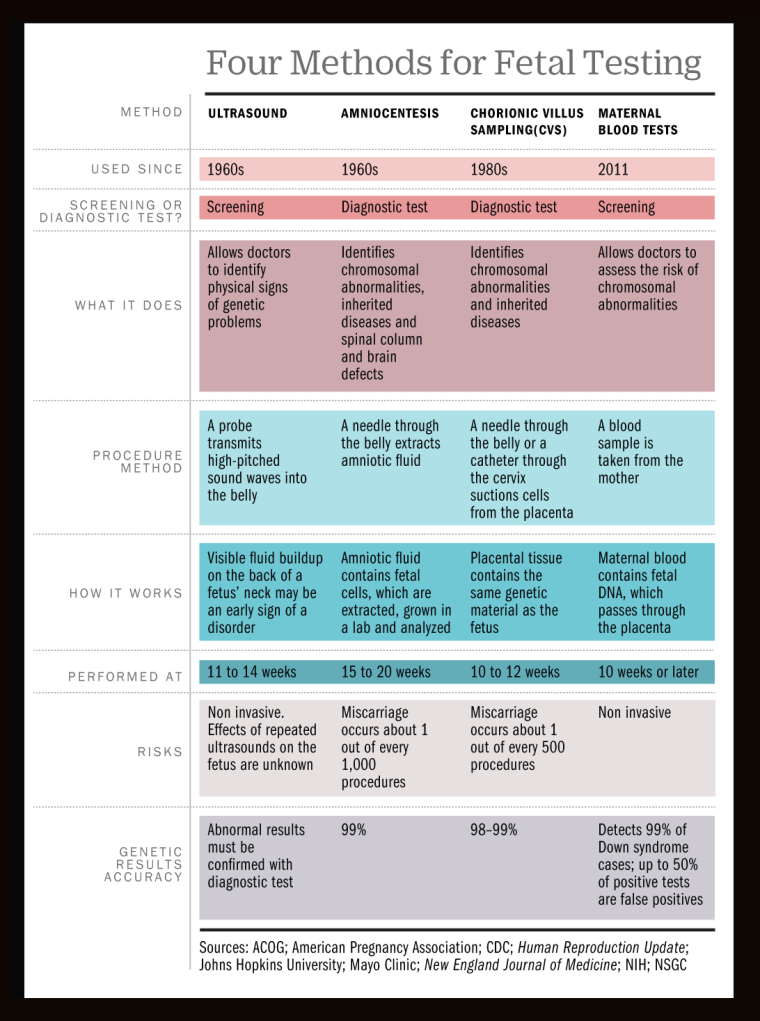
NIPT is a screening test, not a diagnostic test.
A high-risk result does not confirm a condition. It only means further testing may be recommended.
What the Test Can’t Tell You
NIPT does not replace ultrasounds or diagnostic tests.
It cannot detect:
-
Structural birth defects
-
Heart abnormalities
-
Neural tube defects
-
Most inherited genetic disorders
This is why doctors still recommend routine scans and prenatal checkups even after normal NIPT results.
Is the NIPT Test Safe?
Yes. The test poses zero physical risk to the baby.
Since it only involves drawing blood from the mother’s arm, it does not increase miscarriage risk. This makes it appealing to parents who want genetic information without invasive procedures.
When Is the Best Time to Take the Test?
Most doctors recommend doing NIPT between 10 and 14 weeks of pregnancy.
Testing earlier than 10 weeks may not give reliable results because there may not be enough fetal DNA in the blood.
Results usually come back within one to two weeks.
What Happens If Results Are High Risk?
A high-risk result can be emotionally difficult, but it’s not the final answer.
Doctors may recommend:
-
Genetic counseling
-
Diagnostic tests like amniocentesis or CVS
-
Detailed ultrasound exams
These follow-up steps help confirm or rule out conditions with certainty.
Cost and Availability in India
The NIPT test in pregnancy is widely available in India, especially in metro cities and large diagnostic centers.
Costs can vary depending on the lab and screening scope. It’s generally more expensive than standard blood tests but less costly than invasive procedures.
Some insurance plans may cover it, especially if it’s medically recommended.
Who Should Consider the NIPT Test?
While it’s optional, NIPT can be helpful if:
-
You want early reassurance
-
You prefer non-invasive testing
-
You want time to prepare emotionally and medically
-
Your doctor suggests additional screening
It’s a personal choice. Some parents want all available information, while others prefer minimal testing.
FAQs
Is the NIPT test mandatory during pregnancy?
No. It’s optional. Doctors recommend it, but the decision is entirely yours.
Can NIPT be wrong?
False positives and negatives are rare but possible. That’s why diagnostic confirmation is advised for high-risk results.
Does NIPT replace ultrasounds?
No. Ultrasounds are still essential for monitoring physical development.
Can twins have NIPT testing?
Yes, but accuracy may vary. Your doctor will guide you based on your pregnancy type.
Conclusion
The NIPT test in pregnancy has changed how expecting parents approach prenatal screening. It offers early insights, high accuracy, and peace of mind without physical risk.
While it doesn’t provide all answers, it helps many families feel informed and prepared. The best approach is an open discussion with your doctor, guided by your comfort level and medical needs.
Pregnancy decisions don’t have to feel overwhelming. With the right information, they can feel empowering.
