

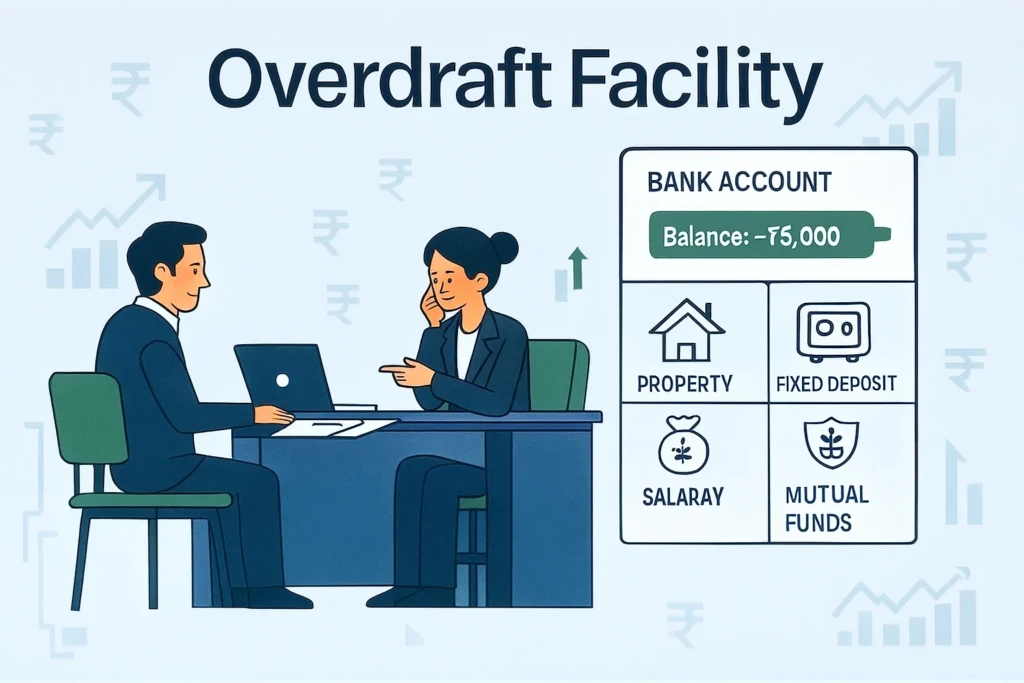
Managing personal finances can be challenging, especially during unexpected expenses or emergencies. To prevent financial strain or cash flow issues, many financial institutions offer a facility called “overdraft.” This article delves into everything you need to know about overdrafts, including their functionality, benefits, limitations, and important considerations such as the impact on your CIBIL score range. By the end, you’ll understand when and how you should use an overdraft wisely to maintain financial stability.
What is an Overdraft Facility?
In simple terms, an overdraft is a credit facility offered by banks that allows account holders to withdraw money from their checking or savings account even if their balance falls below zero. It’s essentially a short-term loan, enabling you access to funds beyond what is available in your account balance.
The overdraft amount is predetermined by the financial institution, and borrowing from your overdraft incurs interest. While it’s a helpful tool to manage immediate financial crises, it’s important to use it responsibly and understand its implications on your financial health.
How Does an Overdraft Work?
The overdraft facility works much like a credit card but is linked directly to your bank account. Here’s how the process typically unfolds:
- Approval of Overdraft Limit
The bank assigns you an overdraft limit, which could vary depending on factors like your income, account type, and relationship with the bank. Some banks allow overdrafts up to a percentage of your existing fixed deposit or collateral. - Borrowing Money
When you withdraw more money than your account balance, the overdraft kicks in, enabling you to access additional funds up to your approved limit. - Interest Charges
Banks charge interest on the borrowed amount. Interest rates for overdrafts are higher than regular loans but lower than credit card cash withdrawal rates. Interest accrues daily and is usually calculated based on your usage. - Repayment Cycle
Repayment is flexible, and you can top up your account at any time to avoid additional interest charges. However, prolonged usage can negatively impact your financial standing.
Types of Overdrafts
1. Secured Overdraft
Secured overdrafts are linked to assets such as fixed deposits, shares, or insurance policies. Since they are backed by collateral, they normally come with lower interest rates.
2. Unsecured Overdraft
Unsecured overdrafts do not require collateral. However, they come with higher interest rates due to the increased risk for the lender. Approval depends heavily on your creditworthiness and CIBIL score range.
Factors That Influence Overdraft Limits
Banks consider several factors before deciding your overdraft limit. These include:
- Credit History and CIBIL Score Range
Your CIBIL score plays a crucial role in determining whether the bank approves your overdraft application and how much is granted. A high CIBIL score (750+) usually translates to favorable terms, while a low score could lead to rejection or limited funding. - Income Level
Stable and sufficient income ensures that banks trust your ability to repay overdraft funds. - Collateral
If you opt for a secured overdraft, the value of your collateral directly influences the limit sanctioned to you.
Costs Associated with an Overdraft
While overdrafts provide flexibility, they come with certain costs. These may include:
- Interest Rates
Interest is the primary cost. Rates can range between 10%-18%, depending on the bank and whether the overdraft is secured or unsecured. - Processing Fees
Banks often charge processing fees, which are a one-time cost for setting up your overdraft. - Utilization Fees
Some banks levy fees based on how much of your overdraft limit is utilized. - Penalty for Non-Repayment
Prolonged non-repayment attracts penalties and could negatively impact your CIBIL score range.
Impact of Overdraft on CIBIL Score Range
Your credit score is an essential indicator of your creditworthiness. Since an overdraft is a form of credit, its usage directly reflects on your CIBIL score range. Consider the following points:
1. Timely Repayment Improves Your Score
If you repay the overdraft on time, it positively impacts your credit score. Banks see you as financially responsible, boosting your ability to obtain loans or credit cards in the future.
2. Overdrawn Account Without Repayment May Lower Your Score
Neglecting repayment could hamper your score, making it harder to secure favorable financial deals.
3. Multiple Overdraft Applications May Hurt Your Score
Each application generates a hard inquiry, reducing your overall score temporarily.
To ensure that your CIBIL score remains unaffected, it’s imperative to use the overdraft responsibly and repay the borrowed amount promptly.
When Should You Use an Overdraft Facility?
Overdrafts can be a lifesaver in emergencies but should be used under specific circumstances to avoid financial distress. Consider using the facility:
1. During Temporary Cash Flow Crunches
If your account balance falls short due to sudden expenses or delayed income, an overdraft can mitigate the gap until your account is replenished.
2. For Emergency Situations
Overdrafts are an excellent option for dealing with medical emergencies, urgent travel, or unforeseen repair costs.
3. To Prevent Check Bounces
If a check presented for payment exceeds your account balance, overdrafts can help avoid check bounce penalties and damage to your financial reputation.
4. Short-Term Business Needs
Small businesses can use overdrafts to manage operational expenses or address seasonal cash flow deficits.
When Should You Avoid Using an Overdraft?
Despite its benefits, overdraft usage is not always appropriate. Avoid using the facility under these circumstances:
1. For Long-Term Funding
Since overdrafts have high interest rates, they are unsuitable for long-term financing needs, such as purchasing a house or starting a business.
2. Regular Expenses
Relying on overdrafts for day-to-day expenditures may lead to a cycle of debt and financial instability.
3. Non-Emergencies
If the expense in question can wait or be postponed, avoid using the overdraft.
Advantages of an Overdraft Facility
Using the overdraft facility wisely offers several benefits, including:
- Immediate access to cash during emergencies.
- Interest is charged only on the utilized amount, making it cost-effective for short-term needs.
- Flexible repayment terms allowing you to replenish your account without rigid deadlines.
- An alternative to high-interest loans or credit card cash withdrawals.
Disadvantages of an Overdraft Facility
While overdrafts have their advantages, they come with some drawbacks:
- Higher interest rates compared to traditional loans.
- Risk of incurring penalties for delayed repayments.
- Prolonged usage may lead to debt accumulation.
- Mismanagement can negatively impact your CIBIL score range.
Tips for Using Overdraft Facilities Wisely
To make the most of an overdraft facility, adhere to these tips:
- Borrow Only What You Need
Avoid over-utilizing your overdraft limit to minimize interest charges. - Repay Promptly
Ensure timely repayment to reduce outstanding debt and maintain a healthy credit score. - Review Terms and Conditions
Understand the interest rates, fees, and repayment terms before opting for an overdraft. - Monitor CIBIL Score Range
Regularly check your credit score to ensure that overdraft usage doesn’t adversely affect it.
Conclusion
An overdraft facility is an effective financial tool to manage temporary cash flow issues or unexpected emergencies. However, its benefits come with responsibilities. By understanding the implications—such as interest rates, repayment timelines, and the impact on your CIBIL score range—you can utilize this facility without compromising your financial health. Additionally, exploring options like bajaj finance overdraft can help you access flexible credit with quick approvals and transparent terms.
Use an overdraft judiciously, ensuring that it serves as a backup rather than a primary method of funding. Regularly monitor your financial habits, and prioritize timely repayments to avoid debt accumulation and a negative impact on your creditworthiness. By managing overdrafts responsibly, including solutions such as a bajaj finance overdraft, you can maintain financial stability while enjoying the flexibility this credit facility provides.
