

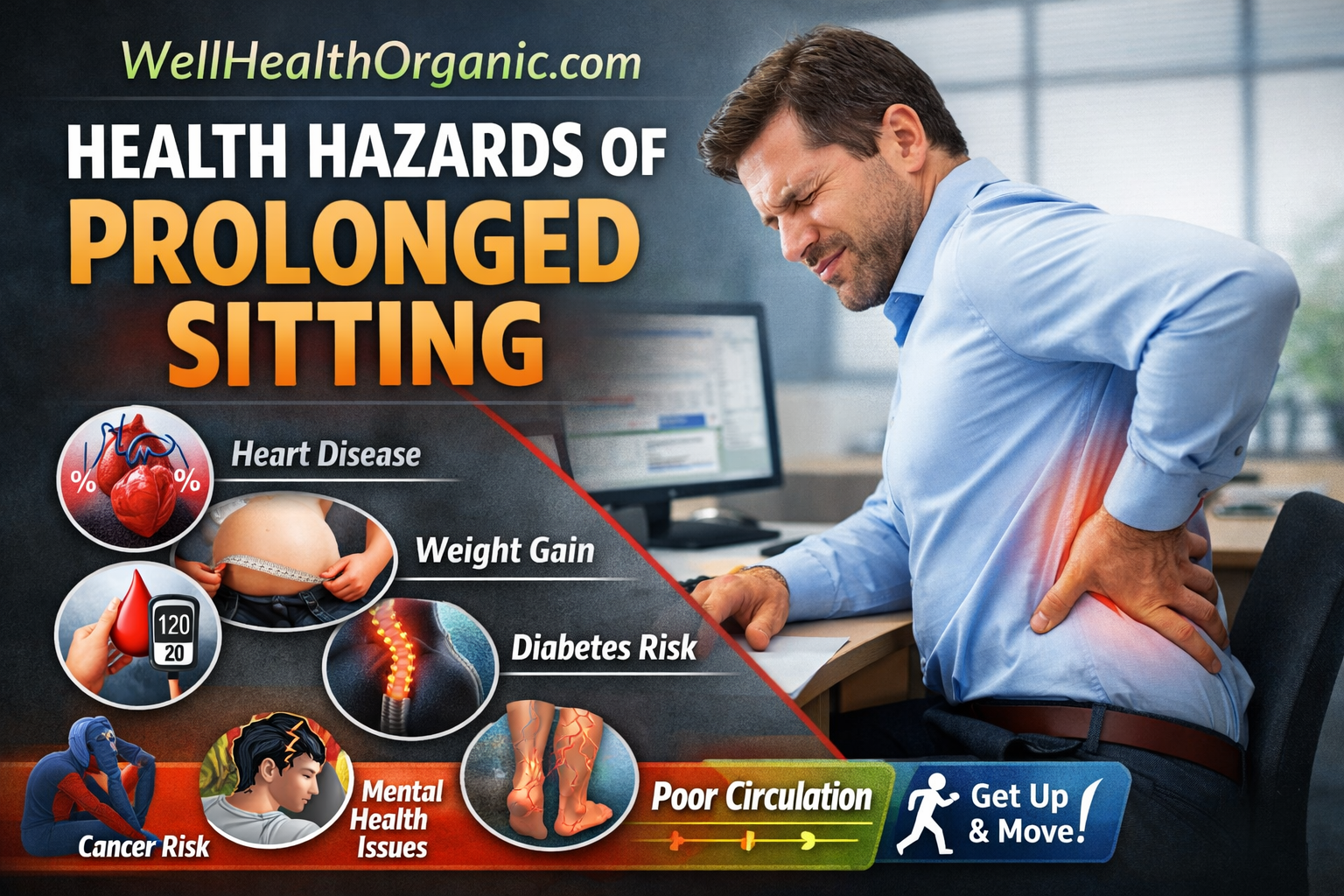
In today’s modern lifestyle, most people spend a large part of their day sitting. Office work, online learning, long screen time, and excessive mobile usage have significantly reduced physical activity. As a result, wellhealthorganic.com health hazards of prolonged sitting has become an important health topic worldwide.
Scientific research shows that prolonged sitting is not just associated with back pain but also linked to serious conditions such as heart disease, obesity, diabetes, mental health issues, and even certain types of cancer. This guest post explains the major health hazards of prolonged sitting in a simple and informative way.
What Is Prolonged Sitting?
Prolonged sitting refers to sitting continuously for 6 to 8 hours or more per day, especially without standing, walking, or stretching.
Common Daily Sitting Activities
| Activity | Average Sitting Time |
|---|---|
| Office desk work | 7–9 hours |
| Online classes | 5–7 hours |
| Television and mobile use | 3–6 hours |
| Long-distance driving | 4+ hours |
The human body is designed for movement. When movement is limited, body systems gradually become less efficient.
WellHealthOrganic.com Health Hazards of Prolonged Sitting
Prolonged sitting affects nearly every major system in the body. Below are the key health risks.
1. Increased Risk of Heart Disease
One of the most serious consequences of prolonged sitting is its impact on cardiovascular health.
Effects on Heart Health
| Impact | Explanation |
|---|---|
| Reduced blood circulation | Slower blood flow |
| Increased LDL cholesterol | Higher bad cholesterol |
| Fat accumulation in arteries | Risk of blockage |
People who sit for long hours have a higher risk of heart attack and stroke, even if they exercise occasionally.
2. Weight Gain and Obesity
Prolonged sitting significantly reduces calorie burning, leading to weight gain.
How Sitting Causes Weight Gain
| Cause | Effect |
|---|---|
| Slower metabolism | Reduced fat burning |
| Muscle inactivity | Lower energy use |
| Increased abdominal fat | Central obesity |
Obesity further increases the risk of diabetes, joint pain, and heart disease.
3. Higher Risk of Type 2 Diabetes
A major concern highlighted in wellhealthorganic.com health hazards of prolonged sitting is the increased risk of type 2 diabetes.
Diabetes Risk Factors
| Factor | Result |
|---|---|
| Reduced insulin sensitivity | Poor blood sugar control |
| High blood glucose levels | Increased diabetes risk |
| Limited muscle activity | Lower glucose absorption |
Studies show that prolonged sitting can double the risk of developing type 2 diabetes.
4. Back Pain and Poor Posture
Sitting for long hours, especially with poor posture, places excessive stress on the spine.
Common Posture-Related Problems
| Problem | Description |
|---|---|
| Lower back pain | Spinal compression |
| Neck and shoulder pain | Incorrect screen height |
| Rounded shoulders | Slouching habit |
Poor workplace ergonomics can turn these issues into long-term musculoskeletal disorders.
5. Muscle Weakness and Joint Problems
Lack of movement causes muscles to weaken over time.
Effects on Muscles and Joints
| Body Area | Effect |
|---|---|
| Hip flexors | Tightness |
| Glute muscles | Weakness |
| Knee joints | Reduced mobility |
Weak muscles increase the risk of injuries and joint disorders.
6. Digestive System Issues
Prolonged sitting slows down digestion and bowel movements.
Digestive Problems Linked to Sitting
| Issue | Cause |
|---|---|
| Constipation | Reduced intestinal movement |
| Acid reflux | Sitting after meals |
| Bloating | Slower digestion |
Regular movement helps improve digestive health naturally.
7. Mental Health Concerns
Physical inactivity also affects mental well-being.
Mental Health Effects
| Condition | Impact |
|---|---|
| Stress | Reduced blood flow to the brain |
| Anxiety | Lack of physical activity |
| Depression | Hormonal imbalance |
Simple activities like walking and stretching can significantly improve mood and focus.
8. Increased Risk of Certain Cancers
Research has linked prolonged sitting to a higher risk of some cancers.
Sitting-Related Cancer Risks
| Cancer Type | Possible Reason |
|---|---|
| Colon cancer | Slowed metabolism |
| Breast cancer | Hormonal imbalance |
| Endometrial cancer | Reduced physical activity |
9. Poor Blood Circulation and Varicose Veins
Sitting for long hours restricts blood flow, particularly in the legs.
Circulation Problems
| Symptom | Health Risk |
|---|---|
| Swollen ankles | Poor blood flow |
| Varicose veins | Vein damage |
| Blood clots | Serious complications |
In severe cases, blood clots can become life-threatening.
How to Reduce the Health Hazards of Prolonged Sitting
The good news is that simple lifestyle changes can significantly reduce these risks.
Practical Prevention Tips
| Habit | Health Benefit |
|---|---|
| Stand every 30 minutes | Improves circulation |
| Short walking breaks | Boosts metabolism |
| Stretching exercises | Enhances flexibility |
| Standing desk use | Reduces sitting time |
Workplace Ergonomics Tips
| Tip | Purpose |
|---|---|
| Screen at eye level | Prevents neck strain |
| Feet flat on the floor | Maintains posture |
| Back support | Protects the spine |
FAQs – WellHealthOrganic.com Health Hazards of Prolonged Sitting
1. How many hours of sitting is unhealthy?
Sitting for more than 6–8 hours per day without breaks is considered unhealthy.
2. Can regular exercise cancel out prolonged sitting?
Exercise helps, but it does not fully eliminate the risks of long, continuous sitting.
3. Is standing better than sitting all day?
Standing is better, but frequent movement and posture changes are most important.
4. Does prolonged sitting reduce life expectancy?
Yes, studies associate excessive sitting with a higher risk of early death.
Conclusion
The topic wellhealthorganic.com health hazards of prolonged sitting highlights a serious but often overlooked health issue. Prolonged sitting increases the risk of heart disease, obesity, diabetes, musculoskeletal disorders, mental health problems, and certain cancers.
By incorporating regular movement, improving posture, and adopting an active lifestyle, these health hazards can be significantly reduced. Remember, your body is designed to move, not remain seated all day.
Must Read-: Choosing the Right Fertility Specialist in Dubai: What Truly Matters
