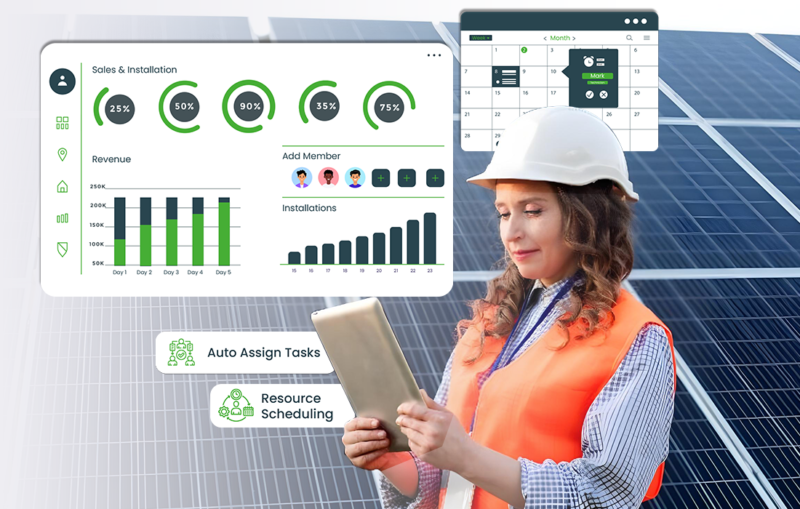
The solar industry is growing faster than ever, but so is the complexity of running a successful solar business. From accurate system design and professional proposals to permitting, financing, and project management — solar companies today need powerful software to stay competitive.
With dozens of tools available, choosing the best solar software can feel overwhelming. In this guide, we’ll break down what to look for in 2026 and highlight one platform that’s gaining strong traction among installers and sales teams: SolarGraf.
Why Solar Software Matters More Than Ever
Modern solar companies face several challenges:
- Rising customer expectations for fast, transparent proposals
- Increasingly complex roof designs and battery storage options
- Lengthy permitting processes
- Need to integrate sales, design, and operations
- Pressure to reduce soft costs and improve close rates
The right solar software can dramatically improve efficiency, reduce errors, and help teams close more deals with less manual work.
Key Categories of Solar Software
Before choosing a platform, it helps to understand the main types of solar software available:
| Category | Purpose | Examples | Best For |
|---|---|---|---|
| Solar Design Software | System modeling, shading analysis, layouts | Aurora, Scanifly, SolarGraf | Designers & Engineers |
| Solar Proposal Software | Professional proposals & sales presentations | SolarGraf, EnergySage, Custom tools | Sales teams |
| Permitting Software | Automated permit package generation | SolarGraf, Others | Operations teams |
| CRM & Sales Tools | Lead management, quoting, financing | SolarGraf, Salesforce + integrations | Sales & Business Development |
| Project Management | Job tracking, scheduling, workflows | SolarGraf + integrations | Project Managers |
| All-in-One Platforms | Design + Proposal + Permitting + Sales | SolarGraf | Growing solar companies |
Many companies now prefer all-in-one platforms that combine multiple functions to reduce tool switching and data silos.
SolarGraf: A Strong Contender for Best Solar Software
SolarGraf has positioned itself as a modern, intuitive all-in-one platform built specifically for solar professionals. It combines design, proposals, permitting, and sales tools into a single streamlined system.
Here’s why many solar companies are choosing SolarGraf in 2026:
1. AI-Powered Solar Design
SolarGraf uses artificial intelligence to speed up system design while maintaining high accuracy. It handles complex roofs, shading analysis, and battery storage modeling with strong bankability verification.
2. Fast & Interactive Proposals
One of its biggest strengths is speed. Many users report creating complete, professional proposals in just a few minutes. The proposals are interactive, mobile-friendly, and highly customizable — helping sales teams present clear savings, ROI, and financing options to homeowners.
3. Automated Permitting
Generating permit-ready plan sets can be one of the most time-consuming parts of a solar project. SolarGraf automates much of this process, helping companies reduce permitting delays.
4. Built-in Financing Integration
The platform includes direct connections with leading financing providers (TPO, leases, and loans). This allows sales teams to present accurate financing options inside the proposal itself — a major advantage for closing deals faster.
5. Real-Time Collaboration & Editing
Sales reps can make changes to proposals on the spot during customer meetings. This level of flexibility significantly improves the customer experience and conversion rates.
6. User-Friendly Interface
Unlike some complex solar tools that require extensive training, SolarGraf is designed to be intuitive. Many users say they can start creating professional designs and proposals with minimal onboarding.
Who Should Consider SolarGraf?
SolarGraf works particularly well for:
- Residential solar installation companies
- Growing solar businesses looking to scale operations
- Sales-focused teams that want to reduce proposal time
- Companies that want an all-in-one solution instead of managing multiple tools
- Teams that value speed, accuracy, and professional customer presentations
How to Choose the Best Solar Software for Your Business
When evaluating solar software options, consider these key factors:
- Speed & Ease of Use — Can your team create proposals and designs quickly?
- Accuracy — How reliable are the production estimates and shading analysis?
- Customization — Can you fully brand proposals to match your company?
- Integrations — Does it connect with your CRM, financing partners, or other tools?
- All-in-One vs Best-of-Breed — Do you prefer one platform or multiple specialized tools?
- Support & Scalability — Will the software grow with your business?
- Cost vs Value — Does it reduce enough manual work to justify the investment?
Final Thoughts
There isn’t a single “best” solar software for every company — it depends on your size, workflow, and priorities. However, platforms like SolarGraf are becoming increasingly popular because they combine speed, accuracy, and modern sales tools in one place.
If your team spends too much time on manual designs, proposals, or permitting, moving to a more integrated solution could significantly improve both productivity and close rates.