
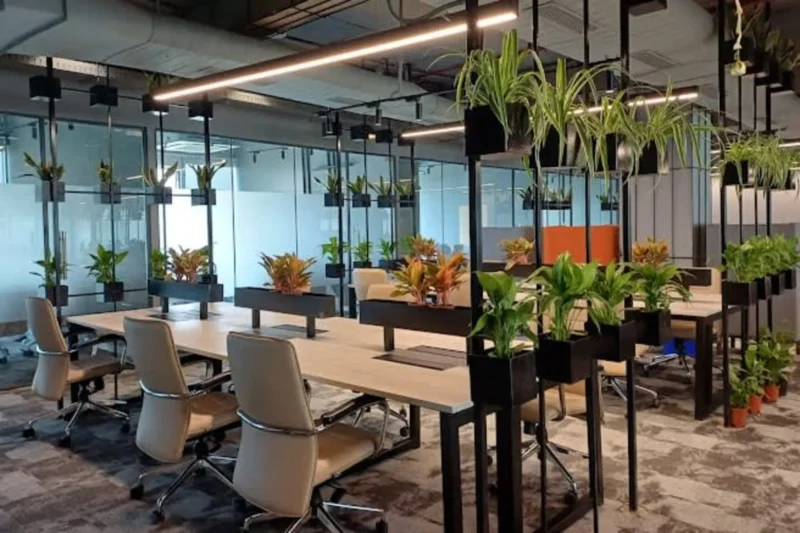
Enterprises in India are increasingly adopting managed workspace solutions because they offer a more streamlined approach to office setup, workplace management, business expansion and operational flexibility. Instead of coordinating multiple vendors for office design, fit-out, technology, facilities and maintenance, businesses can work with a managed workspace partner that brings these services together.
As companies expand across cities, establish Global Capability Centres (GCCs) and adapt to changing workforce requirements, managed workspaces are becoming an important alternative to conventional office leasing and traditional coworking arrangements.
Simplifying Complex Office Setup and Operations
Setting up a corporate office involves more than securing commercial property. Enterprises must plan workplace layouts, coordinate interior design, manage construction and fit-outs, install IT infrastructure, arrange furniture, implement security systems and prepare facilities for employees.
Managing these activities independently can require significant internal resources and coordination.
Managed workspace solutions simplify this process by bringing multiple workplace functions under a coordinated service model. Depending on the arrangement, businesses can receive support for workspace planning, design, infrastructure delivery, facility management and ongoing office operations.
This allows enterprise teams to spend less time coordinating vendors and more time focusing on their core business priorities.
Supporting Faster Business Expansion
India’s business environment continues to attract enterprises looking to expand operations, establish new teams and enter additional markets. However, setting up offices in new cities can involve lengthy planning, infrastructure development and operational coordination.
Managed workspace solutions can help enterprises streamline office expansion by providing access to professionally planned and operationally supported workplaces.
This is particularly relevant for companies establishing GCCs, expanding technology teams or entering new business locations. A managed approach can help businesses align office readiness with hiring plans and operational timelines.
Greater Flexibility for Changing Business Requirements
Enterprise workforce requirements are not always predictable. Companies may increase headcounts, establish new departments, change team structures or adjust their operating models over time.
Traditional office leasing can make these changes more complicated because businesses may need to plan for long-term space commitments and manage additional infrastructure requirements independently.
Managed workspace solutions can offer greater flexibility in how office environments are designed, configured and managed. Enterprises may be able to adapt layouts, add workstations, reconfigure meeting spaces or plan expansion based on changing business needs, depending on the agreement.
This flexibility can be particularly valuable for growing organisations and businesses operating in rapidly evolving industries.
Customised Workplaces Instead of Standardised Office Spaces
Enterprise requirements often differ significantly from those of smaller businesses or individual professionals.
Large organisations may require branded interiors, specialised meeting rooms, secure work areas, dedicated technology infrastructure, collaboration zones and employee amenities designed around their operational needs.
Managed workspace providers increasingly offer customised solutions that allow enterprises to create workplaces aligned with their corporate identity, team structure, employee experience and business functions.
This makes managed workspaces different from conventional coworking environments that primarily offer standardised desks, cabins and shared facilities.
Integrated Real Estate, Design, Build and Operations
Enterprise workspace requirements are evolving beyond conventional coworking and flexible office arrangements. Managed operators that combine real estate, design, build and operations are increasingly addressing larger corporate requirements, as discussed by Karan Chopra, Chairman & Co-CEO of Table Space, in Realtyplus.
The integration of these capabilities is an important reason enterprises are evaluating managed workspace solutions.
When workplace planning, design, construction, infrastructure and operations are coordinated through a single partner, businesses may benefit from better project coordination, more consistent service delivery and reduced administrative complexity.
This integrated approach can also help enterprises maintain workplace standards across different locations while accommodating local operational requirements.
Improving Workplace Management Across Multiple Cities
Enterprises operating across India may manage offices in Bengaluru, Mumbai, Hyderabad, Chennai, Pune, Delhi NCR and other business locations.
Maintaining consistent office standards across multiple cities can be challenging when each location involves different property owners, vendors, contractors and facility management arrangements.
Managed workspace partners can help businesses coordinate workplace infrastructure and operations across locations through standardised processes, service delivery models and operational support.
This can improve consistency in workplace experience, maintenance, infrastructure management and facilities operations while allowing companies to accommodate location-specific requirements.
Supporting Employee Experience and Productivity
Modern enterprise workplaces are expected to support more than basic office functionality. Employees increasingly value environments that provide comfortable workstations, collaborative spaces, meeting facilities, reliable technology and convenient workplace services.
Managed workspace solutions can help businesses create employee-focused environments through thoughtful design, integrated facilities and workplace amenities.
A well-planned office can support collaboration, focused work, employee interaction and productivity. Workplace services such as maintenance, meeting-room management, visitor systems and digital tools can also make everyday office experiences more convenient.
For enterprises competing for skilled talent, the workplace can become an important component of the broader employee experience strategy.
Conclusion
Enterprises are increasingly adopting managed workspace solutions in India because they offer a more integrated, flexible and operationally streamlined approach to workplace infrastructure.
The model helps businesses simplify office setup, support expansion, customise workplace environments, coordinate operations across locations and reduce the complexity of managing multiple vendors.
As enterprise requirements continue to evolve, managed workspace solutions are moving beyond conventional flexible offices to support larger, more specialised and customised corporate environments.
For businesses planning long-term growth in India, the right managed workspace partner can help align office infrastructure, workplace operations and employee experience with broader organisational objectives.